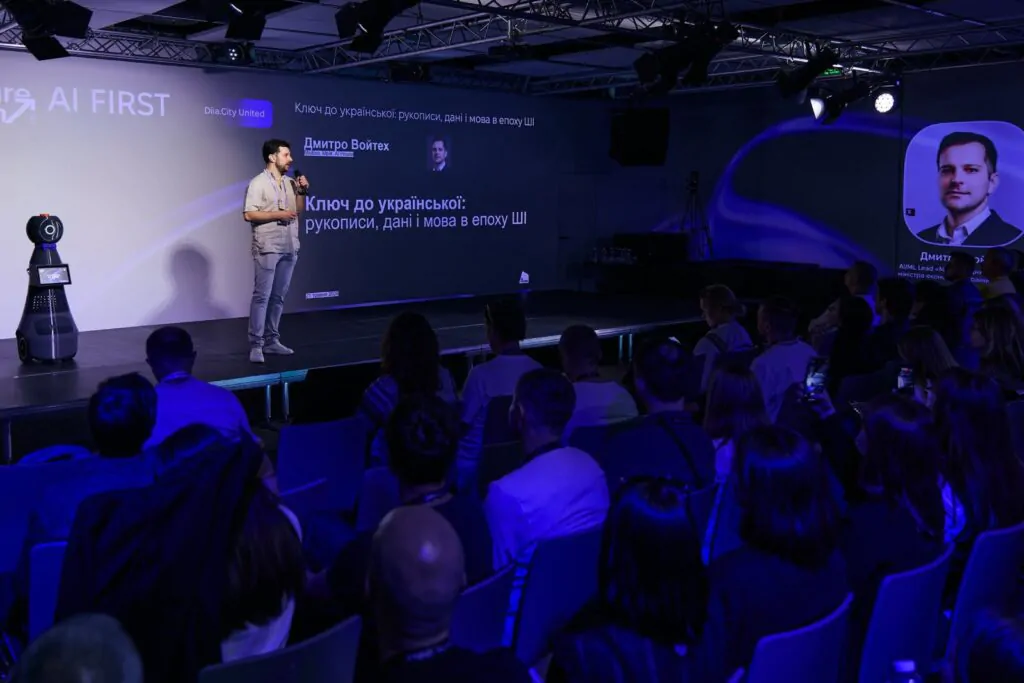
On July 11, Diia.City United successfully hosted a dynamic tech business workshop at the Ukraine Recovery Conference 2025 in Rome, connecting Ukrainian tech leaders with international investors, government officials, and global corporations.
International Support & Cybersecurity
The event began with a focus on the Tallinn Mechanism, an initiative started by Estonia to bolster Ukraine’s cybersecurity.
France and Sweden are the current co-chairs, and Norway joined recently. Speakers emphasized that cyberattacks are an integral part of russia’s warfare, making this coordinated international response crucial.
Specific financial commitments announced within the mechanism include:
- Sweden: Over €12 million for Ukraine’s civilian cyber-resilience.
- France: €2 million, provided with Germany via NATO, for OneWeb solutions.
- Norway: committing €2 million per year.
Ecosystem by the Numbers
Executive Director Natalia Mykolska highlighted Ukraine’s impressive tech landscape: a 4.4% GDP contribution, 302,000 tech professionals, $6.4 billion in IT services exports, and over 2,600 active startups.
The sector has attracted $462 million in investments despite wartime conditions, with major M&A deals continuing to close.
“Ukrainian companies like Grammarly, Preply, Ajax, and Genesis have become global household names, often without users realizing their Ukrainian origins,” Mykolska noted.
She pointed to recent successes, including Headway‘s latest funding round, positioning it as a potential next unicorn.

Investment Momentum Continues
A major conference highlight was the announcement of EBRD and IFC‘s $50 million investment in FlyerOne Ventures’ Ukraine-dedicated fund.
Hanna Shuvalova from Horizon Capital, which manages $1.6 billion in assets, shared:
Some of our portfolio companies demonstrated revenue growth exceeding 40% during the first year of full-scale invasion.
Her fund also celebrated portfolio company Creatio becoming Ukraine’s sixth unicorn with a $200 million funding round from US investors.


Resilience Through Innovation
Genesis co-founder and Executive Director Volodymyr Mnoholetniy shared how the company has sustained growth through process optimization and team resilience.
Despite the war, our business hasn’t just survived — it continues to thrive. We’ve discovered we have the right team that can perform under any circumstances.
Genesis is an ecosystem that helps entrepreneurs launch businesses from scratch. Volodymyr emphasized that now is actually the best time to invest, as competition for outstanding companies and talent in Ukraine is significantly lower.
Global company SoftServe, with over 10,000 employees today, proves that Ukraine’s resilience is built on the resilience of its people. SoftServe co-founder Taras Kytsmey is convinced:
The main reason Western partners continue working with Ukrainians is our exceptionally high quality. SoftServe’s Net Promotion Score (NPS) reaches 80+, while the market average is just 40-50.
Government Digital Transformation
Deputy Minister of Economy Tetiana Berezhna outlined Ukraine’s rapid digitalization efforts, including the eDozvil platform for business licenses, the Pulse dashboard collecting real-time business feedback and Work in Ukraine, a digital tool to combat unemployment.
“The government should know what real problems businesses face, and all our decisions should be data-driven,” she emphasised.
Google Ukraine’s Tetiana Lukyniuk highlighted the country’s AI leadership, noting Ukraine leads Europe in daily AI usage and delivers twice as many unicorns per investment dollar compared to other European countries.


Founders Leading Global Innovation
The workshop featured Ukrainian founders scaling internationally.
Antonina Yeremchuk, Deus Robotics co-founder is sure: Robotics is not just innovation, it’s an infrastructure for rebuilding Ukraine.
Their robots have already increased the productivity of Ukraine’s second-largest logistics company by 300% and are now entering the global market, working with DPD UK.
Artem Starosek’s Molfar OSINT-agency is a “shield for investors,” helping with due diligence and risk management. He believes that while risks exist in Ukraine, they are manageable.
As Anton Vashchuk from UMAEF stated, his fund alone has made 28 investments since the full-scale invasion began. From his point of view, the key to de-risking is diversification, rigorous due diligence, co-investing, and a focus on resilient people.
Mark Newsom from IBM praised Ukraine’s remarkable progress, noting its rise from 102-nd to 5th place in global e-government rankings within six years. IBM is a long-term partner of Ukraine and sees huge opportunities in AI, veteran support and ensuring transparency in reconstruction efforts.
Ukrainian companies have proven their resilience, adaptability, and ability to create world-class products even in the most challenging conditions. The session concluded that now is the time to invest in Ukrainian tech.
As speakers reiterated, this isn’t about charity, it’s about profitable business opportunities.