London Tech Week is one of the largest technology events in the world and the most influential in Europe. It is where global investors, founders and governments come each year to take the measure of the market.
And it is here, for the second year running, that Diia.City United has brought Ukrainian tech to the international community with a single message: growing with Ukrainian business pays off.
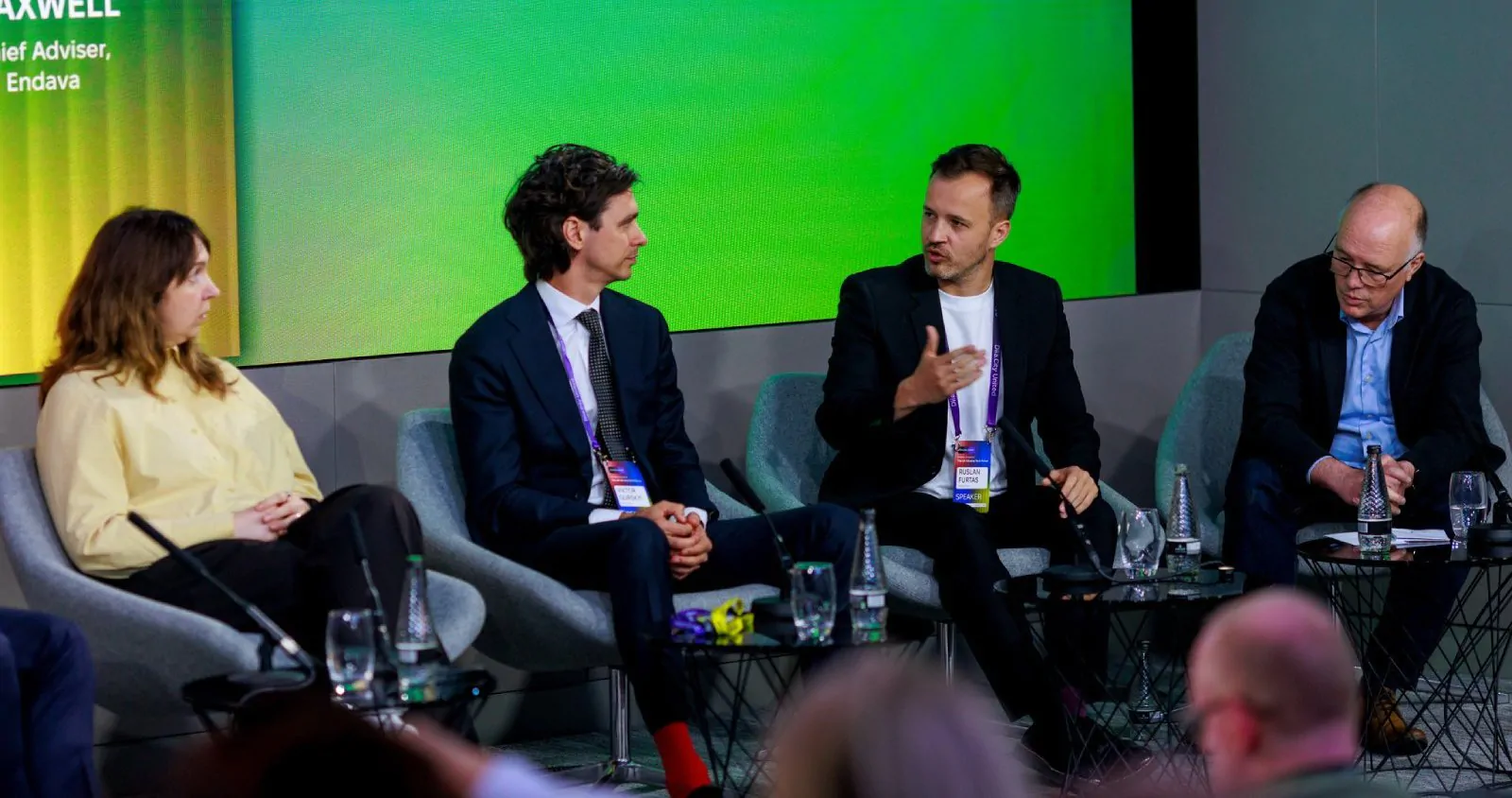
On 10 June, in partnership with the UK Government and Ukraine’s Ministry of Digital Transformation, we hosted a side event, “United by Innovation: The UK-Ukraine Tech Forum”, at the London Stock Exchange. Following the first panel on tech alliances, the conversation shifted to the ultimate question for any Ukrainian founder: how do you scale from a startup into a global company when there is a war on your doorstep
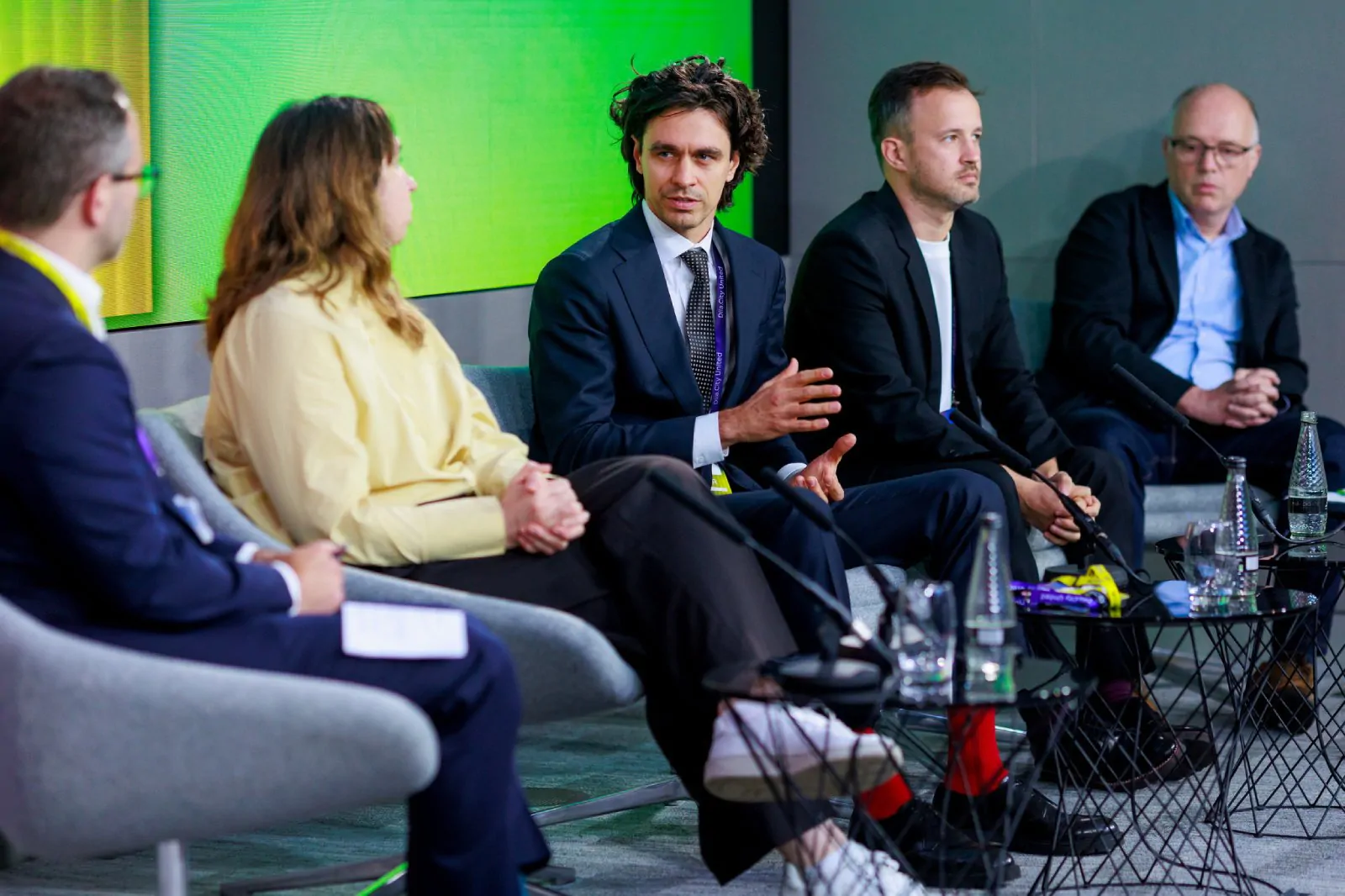
That was the subject of the panel “Scaling Under Pressure: From Startup to Global Company”.
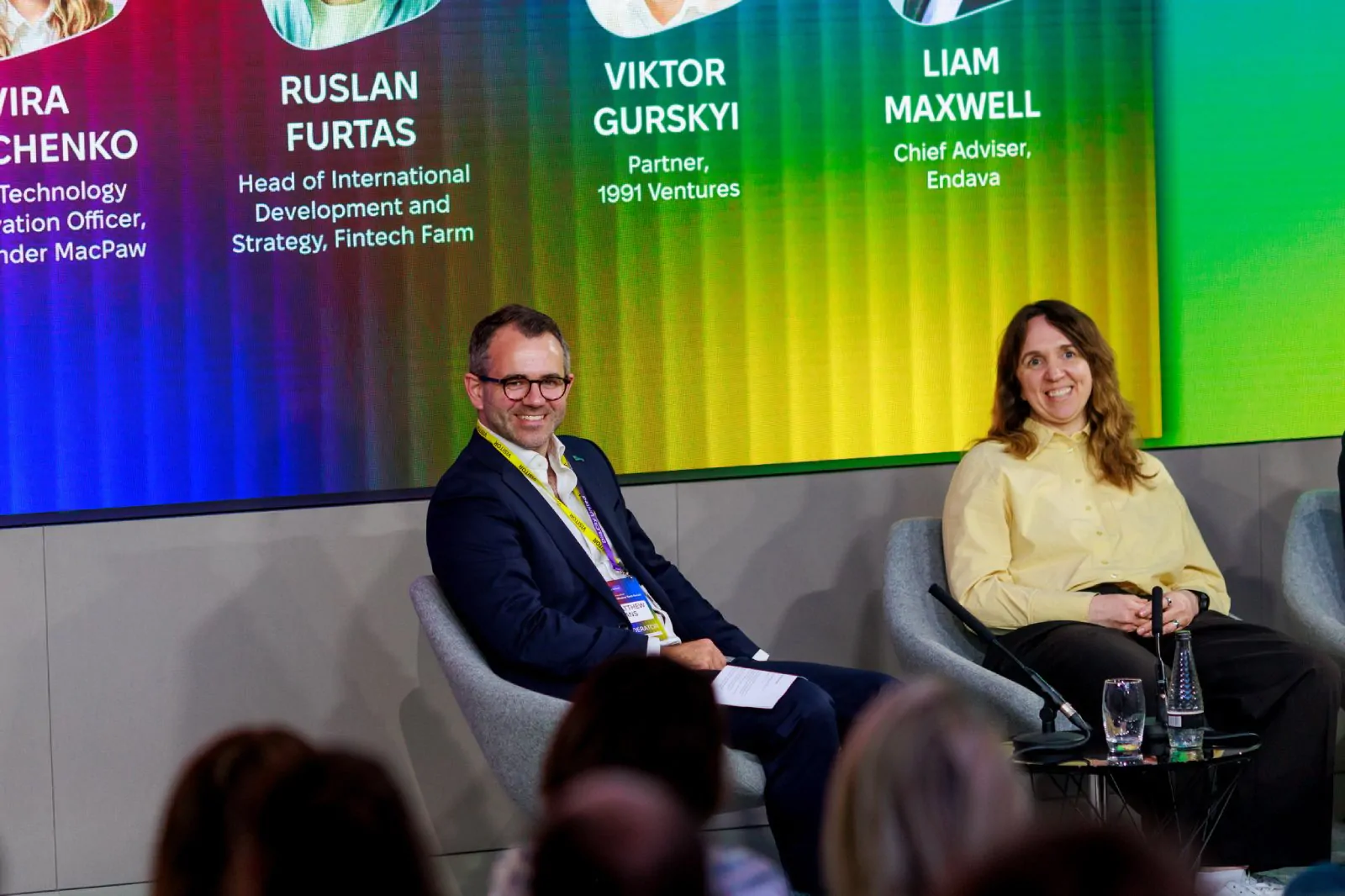
Joining the discussion were:
- Vira Tkachenko, Chief Technology & Innovation Officer and co-founder of MacPaw
- Viktor Gursky, Partner at 1991 Ventures
- Ruslan Furtas, Head of International Development and Strategy at Fintech Farm
- Liam Maxwell, Chief Adviser at Endava
The conversation was moderated by Matthew Evans, Chief Operating Officer and Director of Markets at techUK, the British technology association. The event was supported by the London Stock Exchange and held as part of the UK-Ukraine TechBridge initiative
Pressure forces a different way of building
The biggest challenge for a Ukrainian company today is simple physical presence. Vira Tkachenko described this reality with a very straightforward formula: “plane, train, train, plane”.
MacPaw is an 18-year-old company headquartered in Kyiv with an office in Boston, yet two-thirds of its team remains in Ukraine. Yet networking, without which no company scales, requires founders to be everywhere at once. There is nothing magical about it. It is exhausting, systematic work.
Ruslan Furtas explained the nature of this adaptability through the concept of “personal urgency”. While in normal, peacetime conditions entrepreneurs often seek solutions for various, sometimes abstract business tasks, today every Ukrainian founder builds a product in response to a need that is immediate and existential.
That intensity of personal stake is what makes Ukrainian technology companies unusually inventive and unusually resilient.
The export you won’t see in the numbers
Liam Maxwell has seen government technology from both sides: first as the UK government’s first chief technology officer, then with Amazon’s international government team, and now as an adviser at Endava. He reduces the lesson the world should take from Ukraine to three words: speed to value.
Consider a drone. A development cycle that once ran to five years first compressed to nine months under Ukrainian conditions, and now takes two weeks. Behind that speed sits a specific management practice: decisions are delegated as far down as they will go, and teams are trusted to act on their own judgement.
Viktor Gursky, partner at 1991 Ventures, made the same point from the investor’s side. Ukrainian companies are run from the bottom up, with every member of the team taking initiative and owning the outcome. That sets them sharply apart from the typical Western or Asian corporate structure.
Ukraine is not a charity case. Ukraine is a blueprint for how business will be done in future. That’s exactly why, Maxwell insisted, it would be a strategic mistake for Britain not to learn from its Ukrainian counterparts.
The paradox of capital
Ukrainian companies are often profitable from the first day and can run for years without outside funding. Which raises an obvious question: why raise capital at all if the business is already operationally successful?
They raise it, according to Gursky, not because they are short of cash but because they intend to win globally. It is that combination of frugality and ambition that gives them a chance at global leadership.
At later stages (Series C and beyond), though, serious Ukrainian players also often hit a ceiling. They struggle to close a round even with an annual revenue of $200 million. In such cases, Gursky points out, access to public capital becomes critical.
MacPaw’s experience confirms this: investments are hard to secure even for highly profitable businesses if the market is perceived as “wrong”. Last year, the company actively sought capital for the first time and came up empty-handed. The reason lies in their business model; most funds target B2B enterprise contracts, while B2C is viewed as a risk.
Advice for founders
On one point every speaker agreed: in a global market, visibility wins.
Gursky added two more. Be bold, and hire the best talent you can find anywhere, not only in your own local market. Ukrainian teams are talented beyond question, but in current conditions human capital is a scarce resource rather than a bottomless well.
The UK remains the first-choice jurisdiction for Ukrainian founders. English law and the largest talent pool create the perfect environment. Gursky suggested that the UK government should extend its existing tax incentives for startup investments to include Ukrainian tech companies.
For British investors, he is convinced that would be among the most attractive opportunities on the market.
What’s next?
The discussion confirmed it once again: Ukrainian companies are not short of talent or ambition. What they lack is late-stage capital and wider access to international markets. Those are the two ingredients required to turn a product forged in the harshest conditions into a stable global business.
Partner countries have the resources to close that gap. What remains is to take the next step, from encouraging conversation to contracts.
Diia.City United will go on building the venues where Ukrainian companies meet global investors and partners. Join our community and grow alongside the leaders of the industry.


