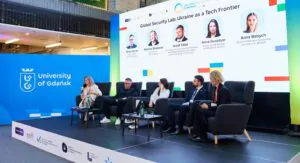
Ukrainian defence technology has outgrown the “wartime start-up” label. At Diia.City United’s Ukraine Tech Day, our side event on the eve of the URC 2026, the question was no longer whether it works, but how Europe builds it into its own security.
Ukrainian defence tech is no longer treated as a wartime start-up phenomenon. It has become a settled industry — with distinctive R&D, battle-proven products, an engineering base of its own, and real strategic weight for European security.
That is why scaling the market for defence and dual-use technology was one of the central themes of Ukraine Tech Day, Diia.City United’s side event on the eve of the Ukraine Recovery Conference 2026 in Gdańsk.
This part of the programme was given over to a single question: how to fold Ukrainian makers of defence and dual-use solutions into Europe’s defence infrastructure on genuinely equal terms — with access to capital, IP protection, joint production, intergovernmental agreements, and the value created kept in Ukraine.
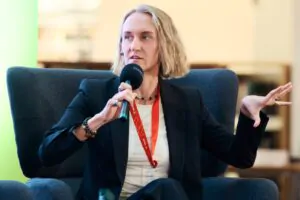
The panel “Global Security Lab: Ukraine as a Tech Frontier” brought together Hanna Hvozdiar, Adviser to the Minister of Defence of Ukraine; Denys Gurak, co-founder of MITS Capital; Nataliia Shapoval, Head of KSE Institute; and Orest Tokach, Head of Dual-Use Technologies and Strategic Industries at the European Commission’s Ukraine Service. It was moderated by Anna Babych, Executive Partner at AEQUO.
From the “Ukrainian miracle” to a settled industry
What happened to Ukraine’s defence industry after 2022 is often called a “miracle.” Denys Gurak disagrees.
For the investor, the industry is not magic but the product of an industrial, engineering and R&D base the country held long before the full-scale invasion.
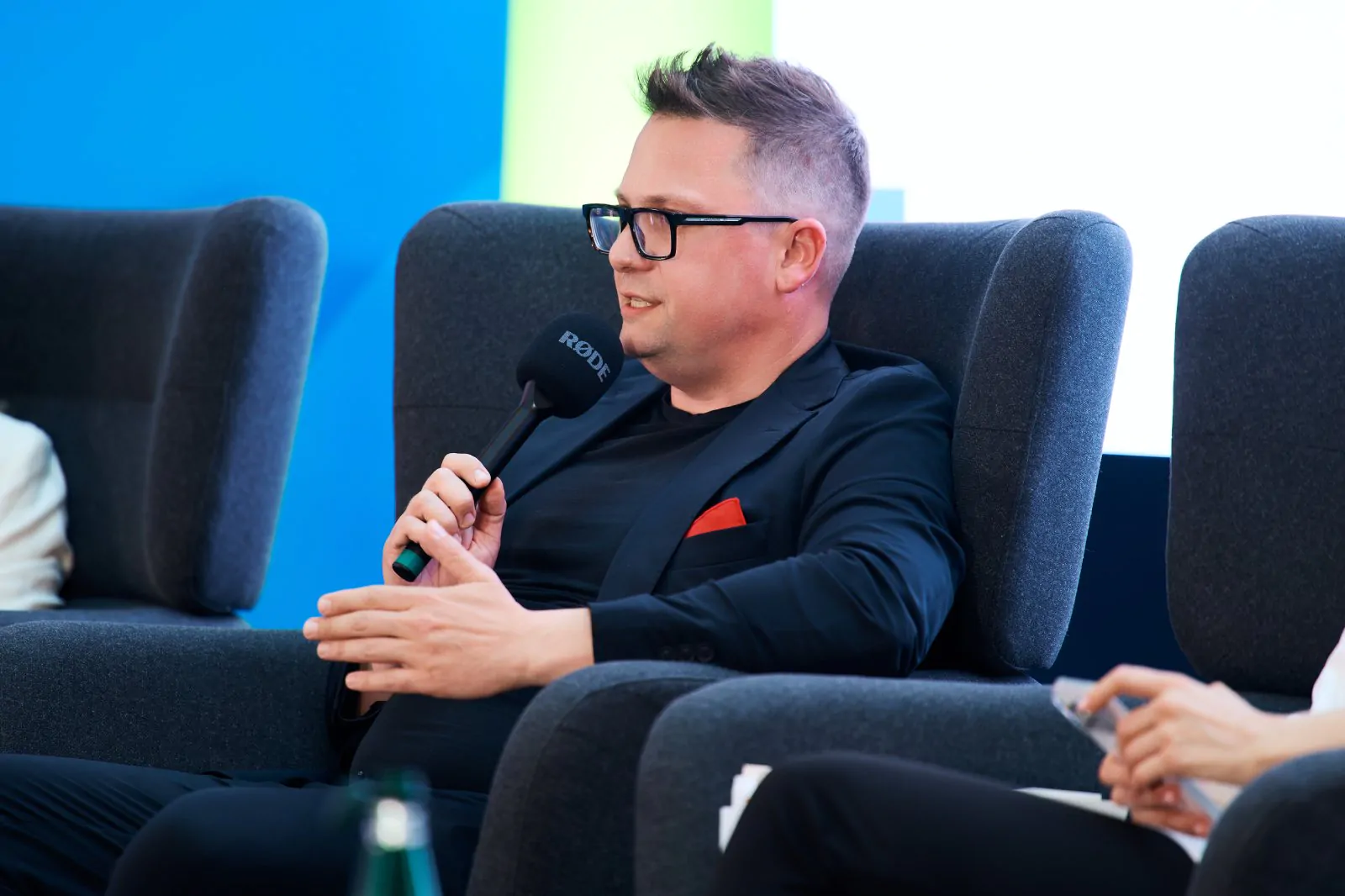
Ukraine has historically been a research base and a maker of components. Our engineers have a decade of experience deploying complex solutions — they simply don’t have the time, right now, to realise that potential.
The real challenge, in his view, lies elsewhere: Europe has to learn to treat Ukraine as an equal partner in shaping the continent’s new security architecture, not as a supplier of the odd standalone product.
Gurak also pressed the case for new legal instruments for the defence industry — among them a common European legal form, or a dedicated structure for the defence sector, that would ease some of the questions around jurisdiction, intellectual property and joint production.
Build with Ukraine: why “buy the technology” doesn’t work
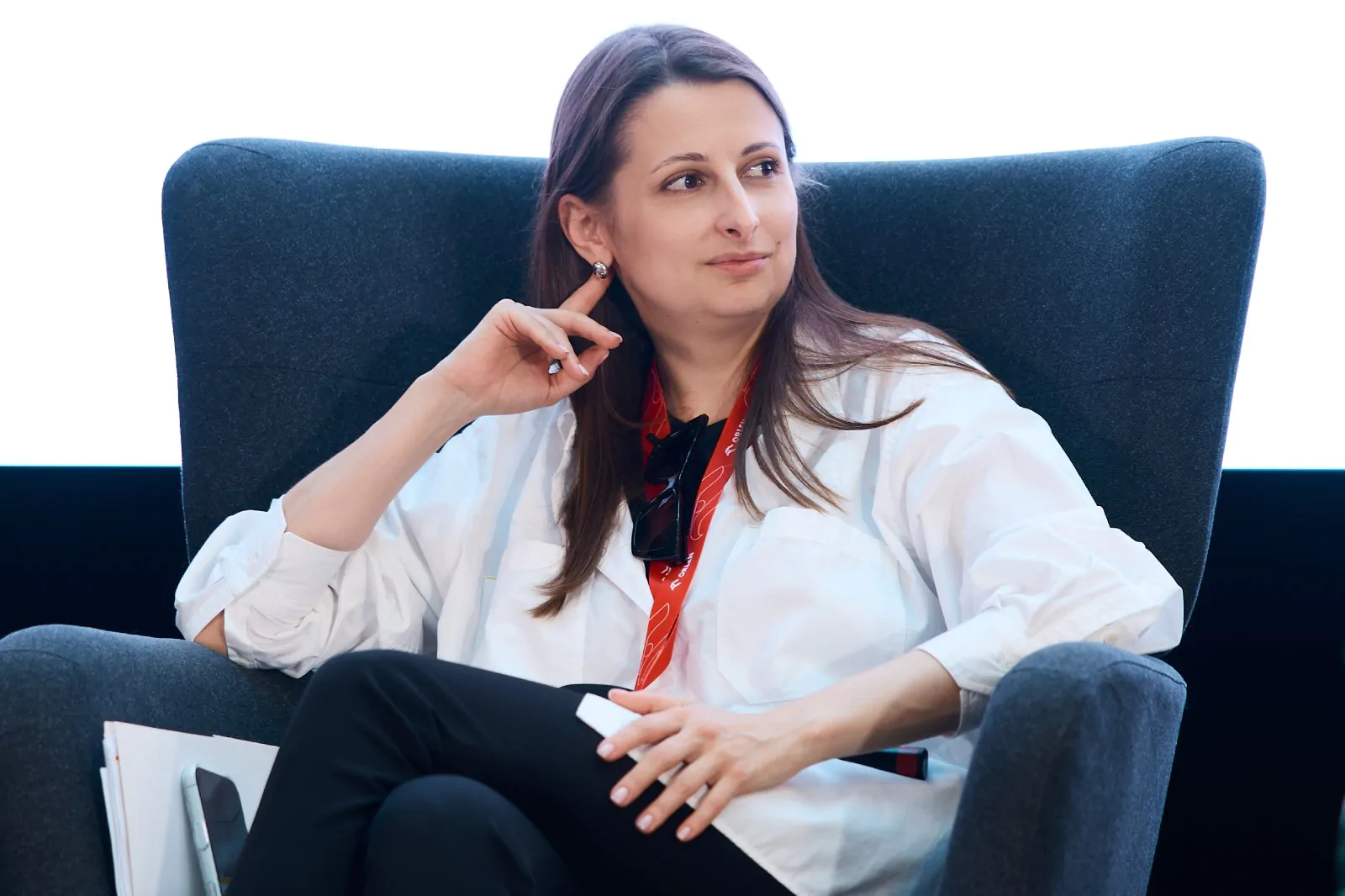
Hanna Hvozdiar set out why the simple logic of “buy the technology and move it to another country” falls apart in defence tech.
Behind every product, she argued, sits far more than IP. There is a whole system: the soldiers who know how to use it, the data, the software, the radars, the infrastructure, the deployment tactics — and a constant cycle of updates. Strip that away and even a strong standalone solution loses much of its effectiveness.
That is why the Build with Ukraine model matters. The point is not to draw technology out of the Ukrainian ecosystem, but to produce jointly, transfer knowledge, and build the intergovernmental agreements and partnerships in which value is created together with Ukrainian companies.
It is a fundamentally different logic of cooperation: Ukraine does not simply sell a product. Alongside its partners, it builds the architecture for putting that product to use, scaling it and integrating it into wider defence systems.
The European investments
A separate strand of the discussion turned to how dual-use and defence technology gets financed.
Orest Tokach, representing the European Commission, stressed that the EU’s approach is already shifting on a significant scale. The recently approved €90 billion Ukraine Support Loan includes €60 billion for the purchase of defence hardware. The Ukraine Facility, meanwhile, has been opened up to dual-use technology: a first agreement worth €160 million was signed in April, and is expected to unlock up to €400 million in financing through Ukrainian banks. Further programmes are in preparation with Poland’s BGK, the Czech NRB, and French and Finnish financial institutions.
The direction of travel is unmistakable: investment in Ukraine’s defence industry is increasingly seen as part of the country’s economic development, its resilience and its long-term integration into the EU.
Nataliia Shapoval backed the point with numbers. On KSE‘s estimates, Ukrainian defence production has grown from roughly $3 billion in 2023 to around $13 billion in 2025. The dual-use market is now estimated at approx. $5.5 billion, with some 3,400 companies making components and around 150 joint ventures already operating in the field. This is no longer a market of a few large players, she noted, but a dynamic ecosystem of small and medium-sized firms — a large share of them grown out of Ukrainian IT.
The evening’s host, Dominic Culverwell, business reporter at The Kyiv Independent, offered one arresting figure: on his numbers, Ukraine produced 4.5 million drones last year, against approx. 300,000 turned out by the United States over the same period.

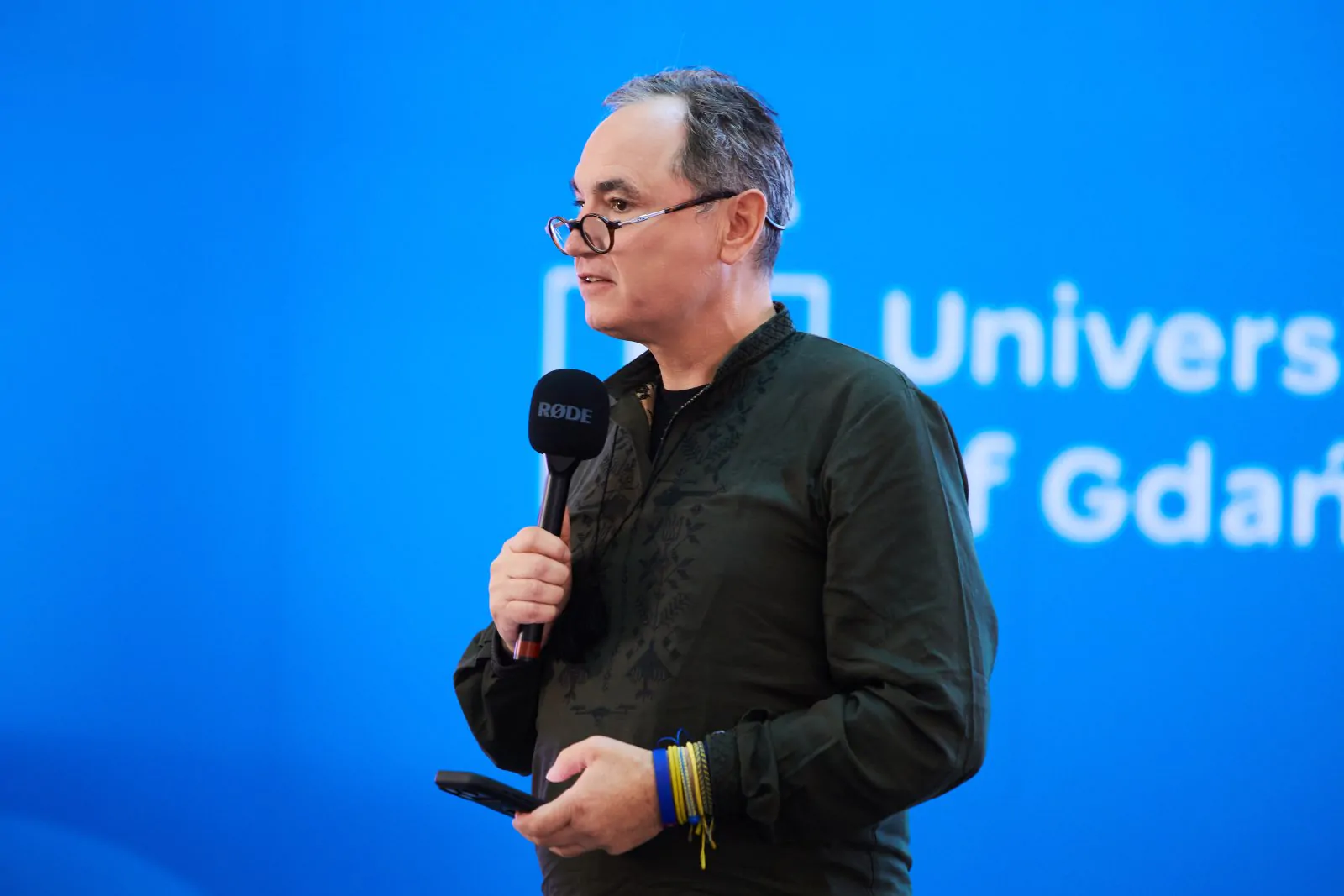
Ukraine Got the Experience. Who’s Getting the Funds?
Perry Boyle, co-founder and CEO of MITS Capital, used his platform to launch a blunt critique of how the international community and investors engage with Ukraine’s defence sector.
The co-founder of the international investment group did not mince words:
I don’t want to travel to Ukraine Recovery Conferences while Russia still occupies 20% of Ukraine. I want to be at a conference about Russia’s defeat in Ukraine.
Boyle’s point was that Ukraine is chronically under-capitalised, even as Western companies raise substantial sums. On his estimate, scaling Ukraine’s defence industry would take around $10 billion — far less than individual European defence-tech players are now pulling in on the wave of interest in the war.
MITS Capital is a Ukrainian-American investment group that backs Ukrainian defence and dual-use technology. Last year it invested $3.74 million in the Ukrainian defence-tech company Tencore, a Diia.City United member that produces the TerMIT robotic logistics platform. It was the first time an international fund had invested directly into a Ukrainian jurisdiction, and the deal was signed on stage at URC 2025 in Rome.
Technology that brings people back to life
A distinct part of Ukraine Tech Day was given to Olga Rudnieva, co-founder and CEO of the Superhumans Center — Ukraine’s nationwide modern war-trauma centre, which since 2022 has specialised in prosthetics, reconstructive surgery, rehabilitation and psychological support for adults and children affected by the war.
In three years, the Superhumans Center has discharged more than 5,000 patients and raised over $120 million. In its first year of operation alone, rudnieva said, Ukraine saw as many complex cases as the United States did across the entire wars in Iraq and Afghanistan.
The technology of war is changing fast, and the nature of its injuries with it. As drones come to dominate, wounds to the upper body are becoming more common — a new set of challenges for medicine, rehabilitation, prosthetics and the whole system of long-term recovery. At the same time, Ukraine is amassing unique data and protocols for treating the newest kinds of war trauma. The world now comes to Ukraine not only to help, but to learn.
That is why Superhumans, together with the Ukrainian Red Cross and the Ministry of Health, is developing the concept of a National Centre for War Trauma in Kyiv.
Rudnieva put a direct request to technology companies, across three areas:
- A data layer — building a system to collect and analyse data that would track how the nature of injuries is changing.
- Forecasting needs — modelling the material and human resources the country will require in two to five years to deal with the consequences of the invasion.
- Monetising unique expertise — developing a model for Ukraine to share with the world what it has learned, for emergency and disaster response among other uses, and benefit from doing so.
Ukraine’s experience, she argued, now matters not only for its own healthcare system but for global medicine, crisis response and the future architecture of security.
What comes next
One of the closing session’s central themes was the future of Ukraine’s defence-tech industry after victory.
The participants agreed on the essentials: demand for dual-use innovation and defence technology will not tail off, because the russian threat to Ukraine and to Europe is not going to vanish. Ukraine’s defence industry therefore has to move to a new stage of development — and for that, our manufacturers need several things in place: access to capital, integration into European supply chains, IP protection, a stronger component base, joint ventures with Europe, and a constant cycle of innovation.
Ukraine has already shown that it can create, test and scale solutions at speed, in the hardest war of our time. The task now is to make that capability a permanent part of Europe’s security infrastructure — which is now already impossible to picture without the Ukrainian companies who build the technologies changing the rules of modern war.
Capital raising, scaling, and EU integration: discover how government officials, investors, and business leaders mapped out the future of Ukraine’s tech sector during the “Open Dialogue: New Horizons for Ukraine-EU Tech Partnerships and Investment” panel at URC 2026.
Organizers: Diia.City United
Event partners: Ukraine-Moldova American Enterprise Fund, KSE Institute, Kyivstar, Digital Association Lewiatan, MITS Capital, Skyfall, TAF Industries, Aequo, Sine.engineering.
With the support of the Ministry of Digital Transformation of Ukraine, Ministry of Economy, Environment and Agriculture of Ukraine, Ministry of Digital Affairs in Poland.
Would you like access to exclusive events like this one? Join Diia.City United tech business association: fill in the membership form or write to us at members@diiacityunited.org