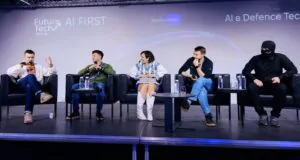
FutureTech MeetUp: AI First gathered some of Ukraine’s leading AI practitioners for a practical, no-theory conversation — from the heads of major product companies to the founders of defence-tech startups. The second panel turned to the industry where the speed of change and the stakes are higher than anywhere else.
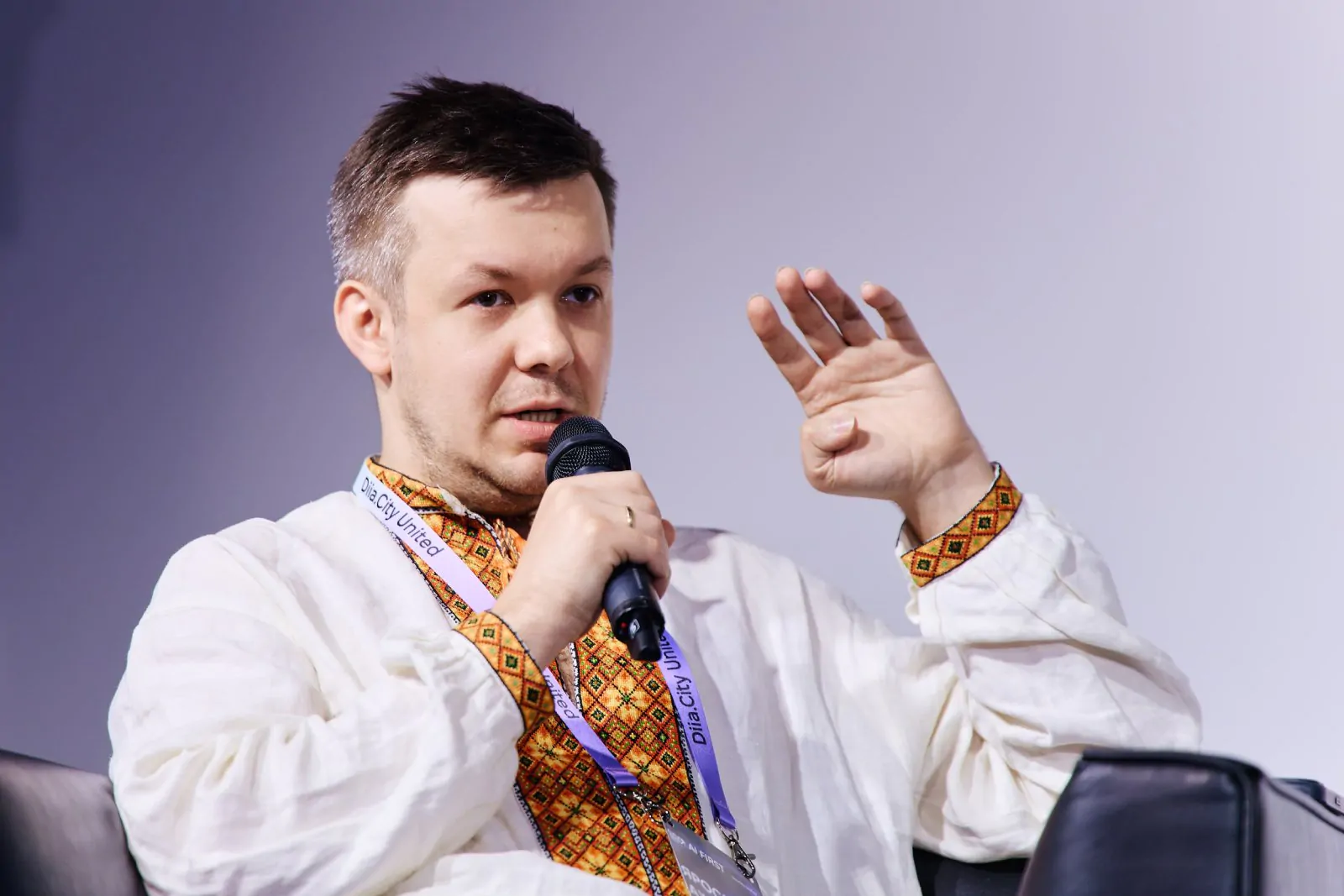
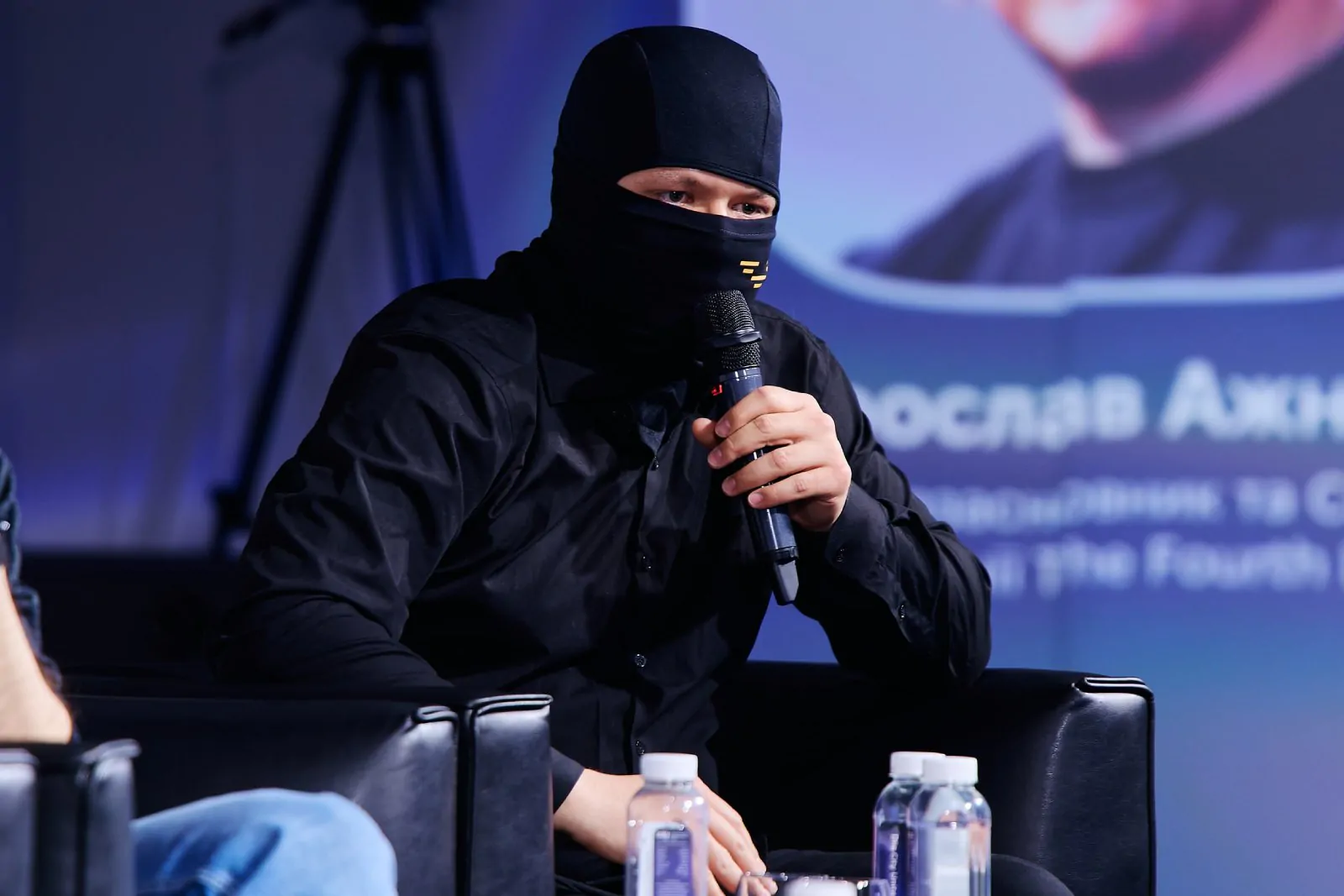
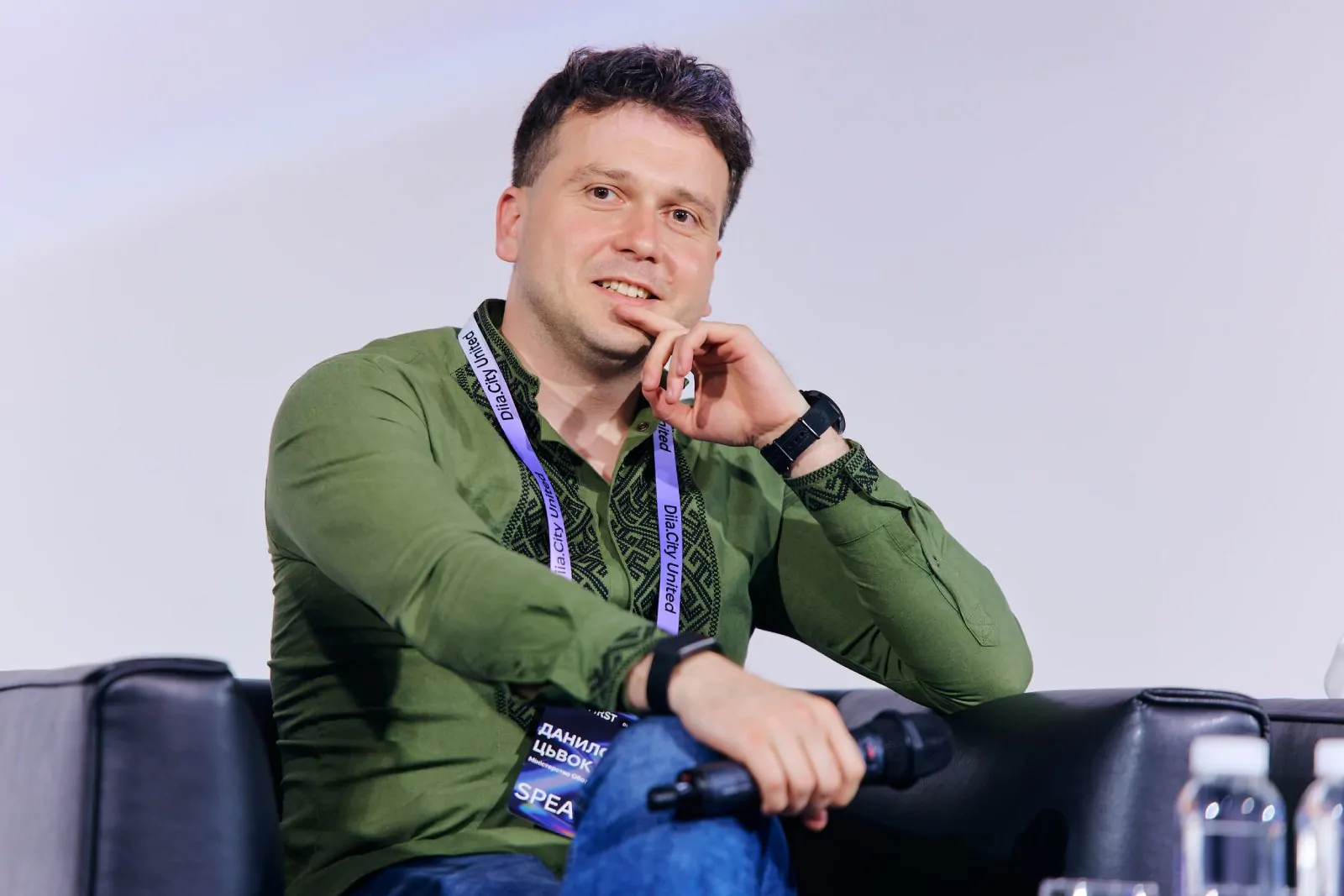
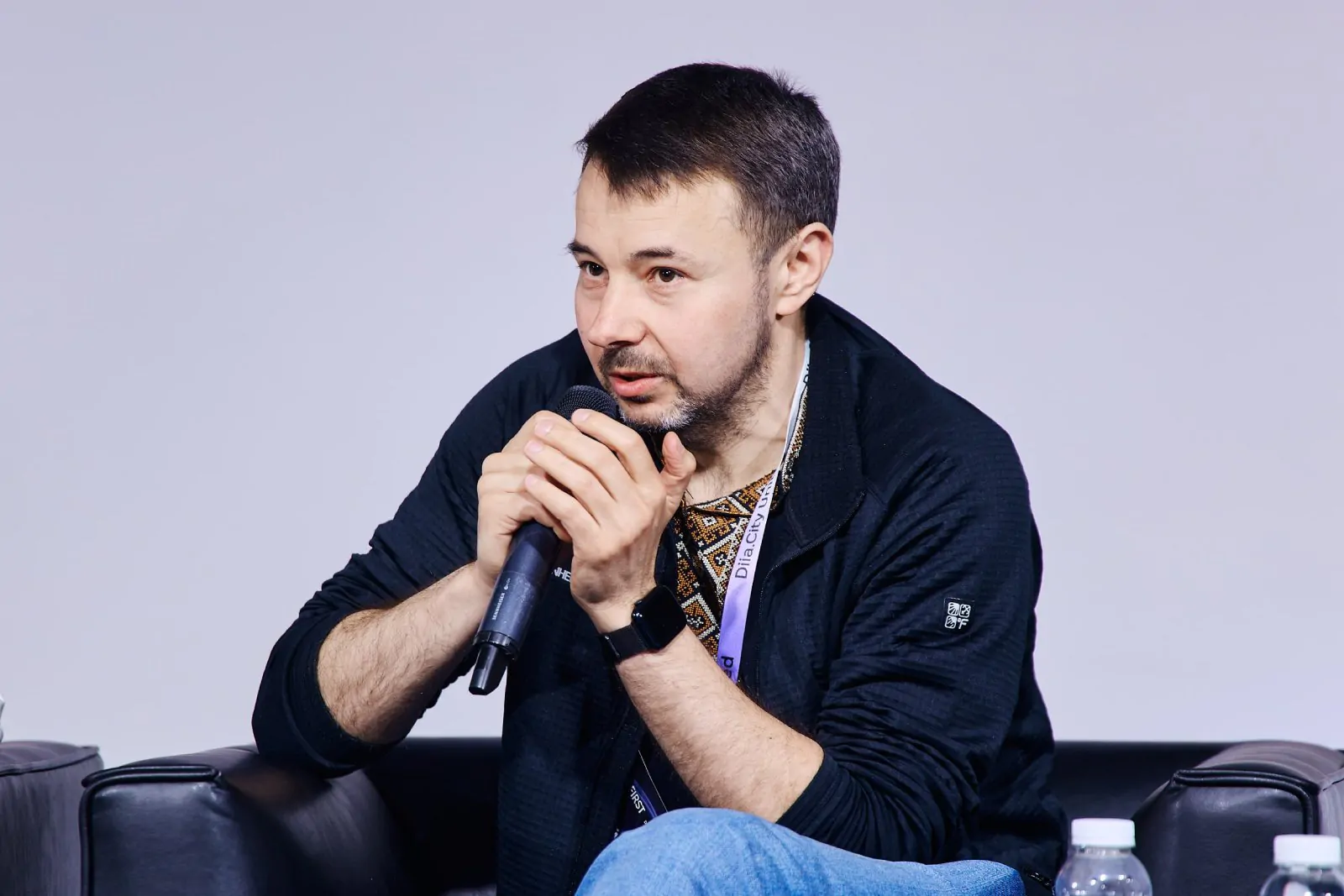
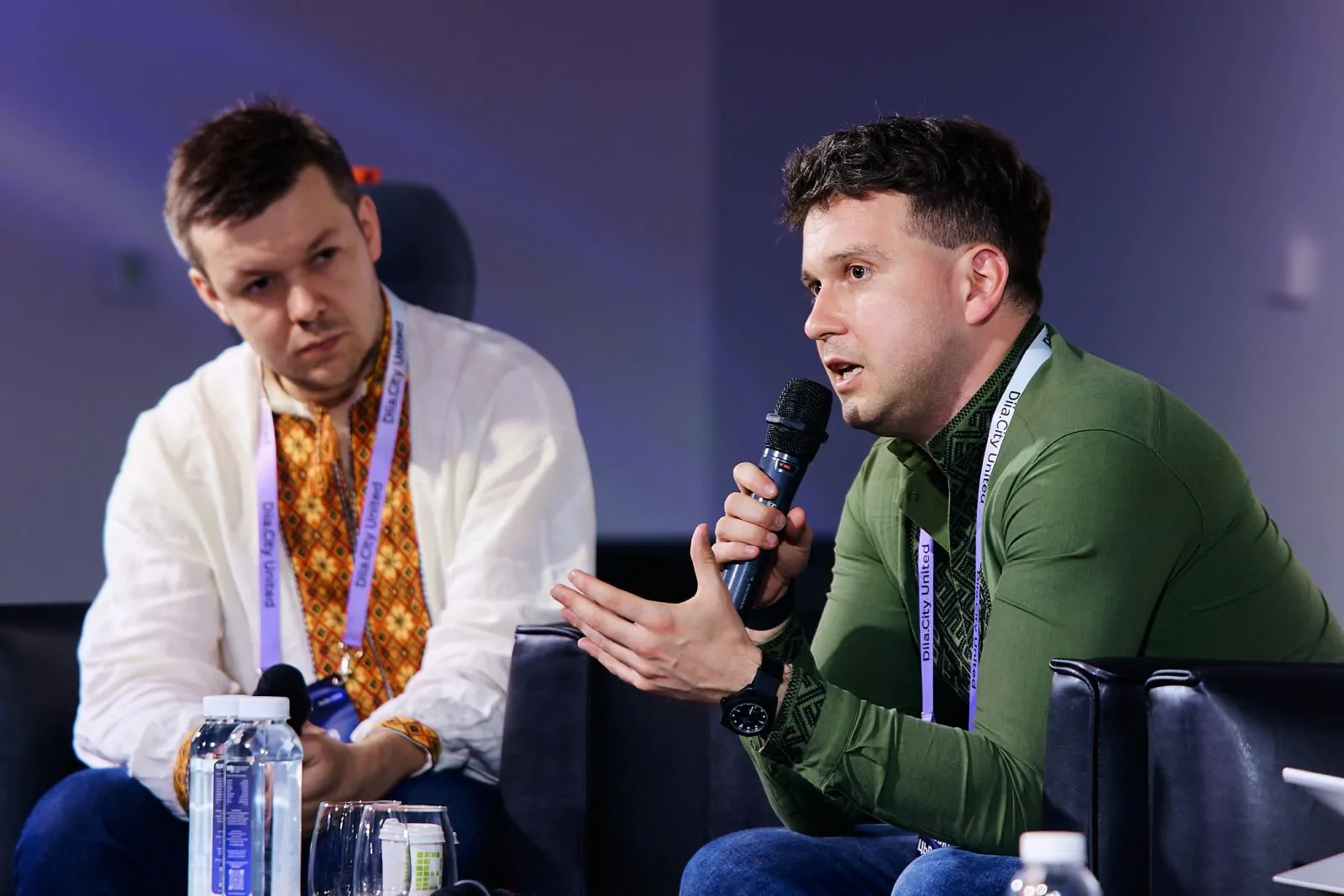
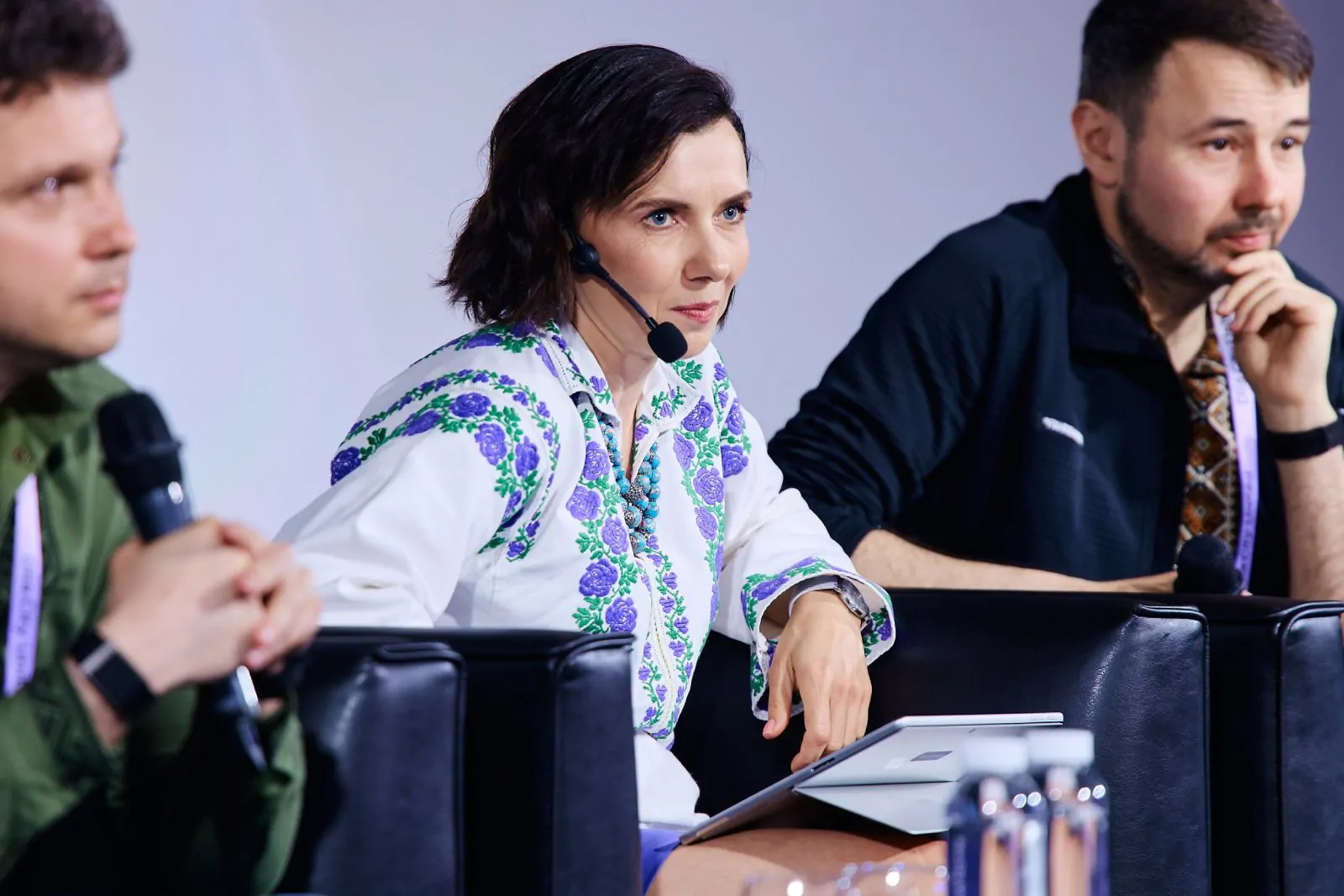
The discussion on ‘AI in Defence Tech’ was moderated by Nataliya Mykolska, Executive Director of Diia.City United. She was joined by Yaroslav Azhnyuk (Founder & CEO, The Fourth Law), Andriy Chulyk (CEO, Sine.Engineering), Danylo Tsvok (CEO, Defence AI Center «A1» under the Ministry of Defence), and Claus Heisler, the Head of Autonomy and Computer Vision, SkyFall.
A Manhattan Project for the 21st century
For Yaroslav Azhnyuk, what is happening in Ukrainian defence tech today is nothing less than the Manhattan Project of our era. According to him, the point is the unprecedented mobilisation of intellect, technology and resources in the name of survival and the leap in battlefield capability that follows.
A fully autonomous FPV drone multiplies combat capability many times over. In place of ten thousand trained pilots, a single drone can be operated by a million service members with minimal training — a hundredfold increase in the people the system can absorb.
And Ukraine is no longer merely adapting other people’s solutions; it is writing new global standards. Azhnyuk stressed
I use this metaphor not to sing our own praises, but as a reminder: our enemy is doing exactly the same thing. And we cannot afford to lose this race.
Red lines and the «launch button»
The second thread running through the panel: autonomy does not abolish ethical limits — it makes them harder to engineer. Every participant agreed that the final decision to strike stays with a human.
But the metaphorical launch button, as Azhnyuk noted, exists at very different levels. It can be pressed 500 metres from the target, or at a base, or headquarters may send a million drones into the air at once.
Claus Heisler of SkyFall described it from the operator’s side: the drone flies autonomously under radar guidance and closes on the target on its own, but the pilot confirms the strike — a safeguard against an accidental choice of target. The Geneva Conventions remain in force, he added:
We fight for our people, but also for our ideals.
Danylo Tsvok returned to the underlying principle: AI recommends, the commander presses, and the commander carries the responsibility. That is the source of one of his centre’s central engineering challenges — building a layer of Explainable AI (XAI) into the command system that not only offers a commander a set of options, but justifies why one option deserves more trust than another.
The bottlenecks of autonomy
Autonomy is often spoken of as if it were a single, monolithic thing. In practice, explained Andriy Chulyk of Sine.Engineering, it is made up of hundreds of small tasks that have to be refined continuously and iteratively: communications, navigation, swarm control, computer vision and mission planning.
Sine.Engineering builds the technological foundation that lets Ukrainian drone manufacturers scale their solutions quickly. What Starlink does today seemed like pure fantasy only a few years ago — and it is precisely these categorical shifts, in Chulyk’s view, that deliver the decisive advantage on the battlefield.
Claus Heisler of SkyFall showed how the same challenges look from inside a single product. The effectiveness of the company’s Shahed interceptor recently doubled.
The full engagement cycle runs like this: radar tracks the target, the drone flies autonomously, and in the final stage computer vision or radar guidance takes over before an automatic detonation. For now, each stage is only partly built out.
The main task for SkyFall’s engineers now is to fold it all into one uninterrupted process and to gather enough data from real-world use. By the developer’s account, that is purely a matter of time.
For Tsvok, the defining element of modern defence tech is the rise of «operating systems of war» — AI assistants for commanders that dramatically accelerate decision-making and model combat scenarios at every level. Two urgent tasks stand between that vision and reality:
- consolidating the data from disparate systems into a single source of truth
- solving the problems of transparency and accountability for AI decisions in target selection
What the state must do now
Moderator Nataliya Mykolska invited the panellists to imagine themselves at the Supreme Command Headquarters (Stavka). Each had one minute to put a proposal to the country’s top leadership. The result was a sharp, pragmatic policy menu:
Yaroslav Azhnyuk of The Fourth Law named three priorities. Ukraine should build a global «Defence Valley» brand; open up exports and create workable rules for the movement of military intellectual property; and procure the products that already, demonstrably, work at the front.
Andriy Chulyk of Sine.Engineering pointed to a planning gap. Technology companies are already planning two to three years ahead, while the state still lives in short, three-month tender cycles.
Claus Heisler of SkyFall focused on strategic investment in science and education. For years the field was starved of funding, which is why Ukraine now has critically few young researchers — and without that foundational base, domestic defence tech will have nothing to stand on a decade from now.
Danylo Tsvok of the Defence AI Center «A1» closed on the economics: Ukraine’s unique combat experience has to be monetised. The products should be created, tested and validated exclusively in Ukraine — and sold on the global market.
Lightning round: what Ukraine’s school of defence AI will look like
Within five years, said Yaroslav Azhnyuk, “the Ukrainian school of defence AI” will be synonymous with a global hub of defence innovation — much as Florence once drew the artists of the Renaissance, Hollywood became the centre of cinema, and Silicon Valley gathered the world’s software builders.
Andriy Chulyk agreed, from a different angle. Ukraine, he argued, is not «the new Israel» — it has itself become the new global centre of the defence industry. More than that: today it is Israeli companies learning from Ukrainian developers, not the reverse.
Claus Heisler placed his bet on unique data: the world’s future AI models will be trained on the masses of information Ukraine is collecting on the battlefield right now.
Danylo Tsvok summed up the country’s edge in three parts — asymmetry, iterative agility, and an instant feedback loop from the front.
The unfinished agenda
For all the panellists’ optimism, several critical tasks remain unresolved at the level of the state:
- opening up exports
- systematic procurement of products that actually work
- long-term investment in science and education
Ukrainian defence tech has built a momentum that other countries will find extremely hard to copy or surpass. But the technological race continues — and Ukraine has no right to lose it.

Thank you
Our FutureTech MeetUp: AI First was made possible by the support of DiiaCityUnited’s trusted partners: AI HOUSE, IT SmartFlex (Vodafone) and HPE by Sophela.
We’re also grateful to all the friends of the Association who helped make the evening truly special: Diia.City, Ukrainian Startup Fund, American Chamber of Commerce in Ukraine, Ukrainian Corporate Governance Academy, Sheriff Holding, Vuzoll, Challenger Accelerator, Radar Tech, De Novo, DOU, Defender Media, Marketer, dev.ua, AIN.UA, Tala Water, Underwood Brewery, Kyiv Kraut, Kombucha Wild, and BOX Catering .
Diia.City United unites Ukraine’s technology companies — among them the defence-tech and dual-use leaders setting the global standard today. Join the Association →


